The Revolutionary FAR Overhaul Has Begun
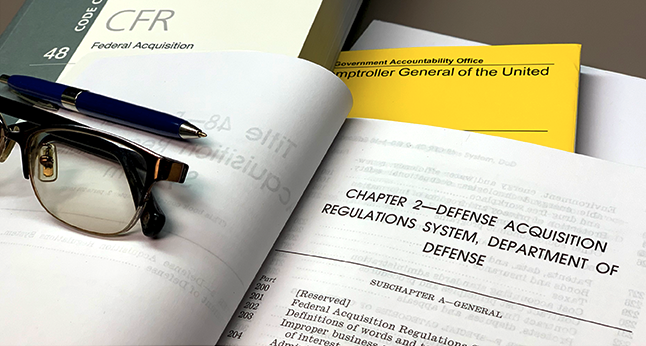
On April 15, the President signed Executive Order (E.O.) 14275, “Restoring Common Sense to Federal Procurement,” marking the beginning of the most substantial update to the Federal Acquisition Regulation (FAR) in more than 40 years. The most recent FAR revisions are identified below.
The FAR has grown to exceed more than 2,000 pages of regulations; consequently, guidance issued by the Office of Management and Budget stated that the Office of Federal Procurement Policy (OFPP) and the Federal Acquisition Regulatory Council (FAR Council) are leading a revolutionary overhaul to streamline the federal procurement process.
To simplify the FAR, the overhaul implementation will be conducted in two phases: (1) class deviation guidance and (2) formal rulemaking. A class deviation is the advance version of what is considered during the formal rulemaking process. The FAR Council’s model class deviations, for each Part of the FAR, will be published on the Revolutionary FAR Overhaul site, as completed. Agencies are generally expected to revise the FAR model class deviations within 30 days, to reflect any agency-specific changes. The plain language text of the model deviations themselves can be accessed through the FAR Parts and Agency Deviations page by clicking the FAR Part’s title. Any Agency-specific changes can be viewed by selecting the dropdown arrow under the FAR Part’s issuance date. Once the FAR Council completes issuing model deviation guidance for all FAR Parts, the FAR Council will begin formal rulemaking in accordance with 41 U.S.C. § 1707.
As of July 7, the following parts of the FAR have been revised, along with their corresponding solicitation provisions and contract clauses in FAR Part 52:
- FAR Part 1 – Federal Acquisition Regulation System (5/2/25)
- FAR Part 6 – Competition Requirements (6/27/25)
- FAR Part 10 – Market Research (5/22/25)
- FAR Part 11 – Describing Agency Needs (6/18/25)
- FAR Part 18 – Emergency Acquisitions (6/12/25)
- FAR Part 34 – Major System Acquisition (5/2/25)
- FAR Part 39 – Acquisition of Information and Communication Technology (6/12/25)
As of August 19, the following parts of the FAR have also been revised, along with their corresponding solicitation provisions and contract clauses in FAR Part 52:
- Part 4 – Administrative and Information Matters (8/14/25)
- Part 5 – Publicizing Contract Actions (8/8/25)
- Part 8 – Required Sources of Supplies and Services (8/14/25)
- Part 12 – Acquisition of Commercial Products and Commercial Services (8/14/25)
- Part 26 – Other Socioeconomic Programs (8/8/25)
- Part 29 – Taxes (7/17/25)
- Part 31 – Contract Cost Principles and Procedures (7/17/25)
- Part 35 – Research and Development Contracting (7/24/25)
- Part 36 – Construction and architect-Engineer Contracts (7/24/25)
- Part 50 – Extraordinary Contractual Actions and the Safety Act (7/31/25)
The following summarizes the FAR Council’s key revisions implemented since August 19:
Part 2 – Definitions of Words and Terms
The FAR Council has reduced the number of definitions to only eight terms. One of the most notable revisions in FAR 2.101 clarified that “Commercial service” includes construction, enabling construction commercial procurements when they comply with FAR Part 36 and Subpart 22.4 requirements.
Part 4 – Administrative and Information Matters
This part has been restructured within each subpart to follow the acquisition process. This new organization makes it easier and faster for users to find the information they need at each stage of a procurement. Additionally, in an effort to better align with national security objectives and address information and supply chain security concerns, relevant content from Part 4 has been moved to the new Part 40.
Part 8 – Requires Sources of Supplies and Services
Part 8 has been significantly revised and reorganized to align with the logical flow of the acquisition process. The Federal Supply Schedule (FSS) procedures have also been streamlined to provide only the essential requirements, because the procedures for FSS ordering are no longer in FAR 8.4. They have been moved into the General Services Administration Acquisition Regulation (GSAR).
Part 12 – Acquisition of Commercial Products and Commercial Services
This part was streamlined to removed 46 unnecessary clauses and provisions and new sections addressing simplified procedures, acceptable contract types, etc. were added. The FAR Council also made it clear that agencies are now required to prioritize procuring commercial products and services from established sources in Part 8, such as FSS and Governmentwide Acquisition Contracts. If these options don’t meet agency needs, streamlined procedures in Subpart 12.2 are to be used for solicitation, evaluation, and award.
Part 40 – Information Security and Supply Chain Security
To eliminate the need for readers to navigate to multiple subparts to address concerns regarding information and supply chain security, the new Part 40 has been organized into three key subparts and now contains requirements previously in FAR Parts 4 and 25.
As of October 1, the following parts of the FAR have also been revised, along with their corresponding solicitation provisions and contract clauses in FAR Part 52:
- Part 3 – Improper Business Practices and Personal Conflicts of Interest (9/11/25)
- Part 7 – Acquisition Planning (9/4/25)
- Part 8 – Required Sources of Supplies and Services (additional update on 8/29/25)
- Part 9 – Contractor Qualifications (8/21/25)
- Part 13 – Simplified Acquisition Threshold (9/18/25)
- Part 14 – Sealed Bidding (9/25/25)
- Part 17 – Special Contracting Methods (9/11/25)
- Part 19 – Small Businesses (9/26/25)
- Part 24 – Protection of Privacy and Freedom of Information (9/4/25)
- Part 27 – Patents, Data, and Copyrights (9/11/25)
- Part 28 – Bonds and Insurance (8/28/25)
- Part 30 – Cost Accounting Standards Administration (8/28/25)
- Part 33 – Protests, Disputes, and Appeals (8/21/25)
- Part 37 – Service Contracting (9/25/25)
- Part 41 – Acquisition of Utility Services (9/25/25)
- Part 44 – Subcontracting Policies and Procedures (9/4/25)
- Part 45 – Government Property (9/11/25)
- Part 46 – Quality Assurance (8/21/25)
- Part 47 – Transportation (9/25/25)
- Part 48 – Value Engineering (8/28/25)
- Part 49 – Termination of Contracts (8/21/25)
The following summarizes the FAR Council’s key revisions implemented in the most recent revisions:
Part 3 – Improper Business Practices and Personal Conflicts of Interest
The overhaul of FAR Part 3 focused on plain-language updates, keeping the structure and implementing clauses mostly intact. The part’s structure remains unchanged, and all implementing clauses are the same, except for the deletion of the outdated FAR 52.203-15, Whistleblower Protections Under the American Recovery and Reinvestment Act of 2009. FAR 52.203-13 was also revised to make clear that a contractor’s duty to disclose evidence of False Claims and criminal violations is mandatory. Failure to disclose can lead to suspension or debarment, regardless of whether or not FAR 52.203-13 is applicable.
Part 13 – Simplified Acquisition Threshold
The extensive overhaul of FAR Part 13 began with renaming the Part “Simplified Procedures for Noncommercial Acquisitions” and systematically removing most of its content. As part of a larger streamlining effort, rules for commercial acquisitions were moved to FAR Part 12, and other regulations were relocated to relevant sections of the FAR. For instance, procedures for commercial products and services now fall under FAR 12.201-1, while rules for advance payments will eventually be integrated into FAR Part 32.
Part 19 – Small Businesses
In a significant update, FAR Part 19 has been retitled “Small Business” and reorganized to align with the acquisition life cycle, featuring subparts for FAR 19.1, Presolicitation, FAR 19.2, Evaluation and Award, and FAR 19.3, Postaward. While the “Rule of Two” remains a requirement for contracts between the micro-purchase and simplified acquisition thresholds, decisions to set aside orders under multiple-award contracts are now at the contracting officer’s discretion and cannot be protested. Concerning multiple-award contracts, size status will now be established at the initial contract award and only updated following specific contract-level events, such as a merger or acquisition. This change reduces the administrative burden and streamlines the process for both businesses and agencies. For the 8(a) program, contracting officers must prioritize competitive acquisitions using SBA-approved vehicles before considering sole-source awards. Furthermore, follow-on requirements from the 8(a) program are now automatically released if the new contract is set aside for the HUBZone, SDVOSB, or WOSB programs, a change that may conflict with current SBA regulations. The rules for SDVOSB, WOSB, and HUBZone programs, as well as protest procedures for size and status, remain unchanged.
Part 30 – Cost Accounting Standards Administration
Key changes to FAR Part 30 include a 30% reduction in length through plain-language updates, and a renewed emphasis on electronic records. The text of FAR Subpart 30.001 remains largely intact despite cross-references have been removed. Further practical guidance for contracting officers will now be available in the FAR Companion Guide, which will focus on practical coordination between cognizant federal agency officials (CFAOs) and individual contracting officers. Ultimately, it will contain best practices for waivers and exemptions, along with examples for addressing CAS noncompliance and related issues.
Part 33 – Protests, Disputes, and Appeals
The core substance of FAR Part 33 remains intact, as most protest and dispute procedures are set by statute. However, the revision streamlines the Part by removing text that merely duplicated other regulations, such as GAO procedures. Additionally, a new purpose statement has been added to reflect the government’s priorities for fewer protests, earlier resolution, and greater efficiency and fairness in the acquisition process.
Part 37 – Service Contracting
The updated Part 37 also features a new, more logical structure emphasizing policy priorities and aligning guidance with the acquisition lifecycle. Key changes include elevating topics like Performance-Based Acquisition (PBA), personal services, and inherently governmental functions to distinct subparts at the beginning of the regulation, and organizing sections by phases, such as Presolicitation, and Postaward, to function as a procedural roadmap.
Part 44 – Subcontracting Policies and Procedures
A substantial overhaul of FAR Part 44 has reorganized the subparts to align with the acquisition lifecycle, while generally maintaining the previous order. The rewrite, which according to the Practitioner Album aims to create a “more agile, risk-based, and efficient system” that empowers contracting officers and reduces administrative burdens, involves significant changes, including the relocation of specific guidance—particularly regarding Contractor Purchasing System Reviews (CPSRs)—to the forthcoming FAR Companion Guide. The provisions and clauses for commercial products and services subcontracts have also been revised, with the related clause, FAR 52.244-6, being updated.
Part 45 – Government Property
The overhaul of FAR Part 45 was minimal, focusing on simple language changes, such as replacing “shall” with “must.” Additionally, despite some content being moved to the FAR Companion for more detailed procedures, the Part’s overall structure and related contract clauses remain unchanged.
Part 49 – Termination of Contracts
The primary revisions of Part 49 focus on the use of plain language to simplify the existing text, reducing the word count by over 2,500 words. The Part’s overall structure and substance, however, remain intact.
Each part is subject to its own deviation issuances by federal agencies. The FAR Parts and Agency Deviations page provides a drop-down list of agencies that have issued deviations for each part. Additionally, the most notable and useful additions to the FAR Overhaul are the Practitioner Albums, which includes resources, such as best practices, videos, and tested practitioner tools.
Each part is subject to its own deviation issuances by federal agencies. The FAR Parts and Agency Deviations page provides a drop-down list of agencies that have issued deviations for each part.
This page will be updated when further overhauled sections are released. For further guidance on the Revolutionary FAR overhaul, contractors can visit the Revolutionary FAR Overhaul site or contact a member of Taft’s Government Contracts team.
This update is part of Taft’s White House Toolkit. Please reference the toolkit for additional cross-practice coverage of federal legislative and regulatory activity that may affect businesses or organizations.
In This Article
You May Also Like
UPDATE: Federal Court Enjoins Trump Administration’s Anthropic Ban for Government Contractors U.S. Government Bans Use of Anthropic Products: What This Means for Government Contractors and AI Strategy